Buying solid polyester staple fiber is not only about finding the lowest price. You need to choose a fiber that works well with your production line and gives you a stable final product.
Before you ask for a quotation, you should know the application, fiber grade, denier, cut length, color and required quantity. This guide explains each point in simple language.
What is polyester staple fiber?
Polyester is a synthetic material used in textiles and many industrial products.
Polyester staple fiber, also called PSF, is polyester fiber cut into short and controlled lengths. Manufacturers use it in textiles, nonwoven materials, felt, filters, insulation, carpets and other products.
The word staple means that the fiber has a limited length. This makes it different from polyester filament, which comes in a continuous form.
What is solid polyester staple fiber?
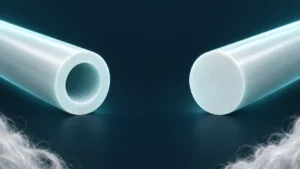
Solid polyester staple fiber has a solid cross section. The inside of the fiber does not have an empty channel.
Manufacturers use solid PSF in many industrial processes. Common applications include nonwoven materials, needle punched felt, geotextiles, filtration materials, carpets, insulation and selected textile products.
Solid fiber is different from hollow fiber. Hollow fiber has an empty space inside its cross section. It often provides more volume and lightness, so manufacturers commonly use it in filling products.
Alyaf Nemoune currently focuses on solid polyester staple fiber. Buyers should confirm that solid fiber matches their application before placing an order.
Start with the final application
The right fiber depends on the product you want to make.
A fiber for industrial felt may not work in the same way as a fiber for filtration or insulation. Your equipment, production method and quality target all affect the selection.
Before contacting a manufacturer, explain your final product. You should also describe your production line and any current problems.
For example, tell the manufacturer if the fiber does not open well, creates static electricity, forms lumps or increases production waste.
If you already use another fiber, share its technical information or send a sample. This gives the manufacturer a clear starting point.
Choose virgin, recycled or custom grade
After confirming the solid structure, choose the material grade.
Virgin polyester staple fiber
Manufacturers produce virgin PSF from new petrochemical raw materials.
Buyers often consider virgin fiber when they need stable color, clean material and consistent performance. However, the word virgin does not guarantee that the product will work well in every application.
You still need to review the technical information and test a sample on your production line.
Recycled polyester staple fiber
Manufacturers produce recycled PSF from recycled polyester materials.
This grade can help companies use recycled materials and manage raw material costs. Buyers should pay close attention to raw material control, color, contamination and batch consistency.
Ask the manufacturer how it checks incoming materials and how it tracks each production batch.
Custom polyester staple fiber
A standard grade may not always match your production line.
In this case, the manufacturer can review a custom grade. It may adjust denier, cut length, color or raw material according to your requirements.
For a custom order, provide a reference sample or clear technical information. Test the new sample before you confirm the main order.
What does denier mean?
Denier is a unit that describes the linear mass of a fiber.
In simple terms, a lower denier usually means a finer fiber. A higher denier usually means a thicker fiber.
Finer fibers can create a softer surface. Thicker fibers can provide more structure or volume. However, a lower denier does not always mean better quality.
The best denier depends on your final product, production equipment, cut length and quality target.
Alyaf Nemoune currently offers solid polyester staple fiber from 4D to 20D in whole number deniers. The technical team should review the correct denier for each application.
Why is cut length important?
Cut length shows the length of each fiber piece.
This specification affects fiber opening, feeding, carding and web formation. It can also affect product uniformity and production waste.
A cut length that does not match the equipment may cause poor opening, fiber wrapping or lumps in the final product.
You should always choose denier and cut length together. Asking for 6D fiber without giving the cut length and application does not provide enough information.
Alyaf Nemoune can offer custom cut lengths up to 128 millimeters. This does not mean that every length works for every production line. The buyer and the technical team should confirm the correct length before production.
Other technical points to review
Denier and cut length are important, but they do not tell the full story.
Two fibers with the same denier and cut length may behave differently. Crimp, strength, elongation and surface finish can change their performance.
Crimp
Crimp means the waves or bends in the fiber.
Crimp affects how fibers hold together. It can also affect volume, opening and web stability.
Strength
Fiber strength shows how much pulling force the fiber can handle.
More strength does not always give a better result. The correct level depends on the production process and final product.
Elongation
Elongation shows how much the fiber can stretch before it breaks.
This property affects how the fiber behaves under force during production.
Surface finish
The surface finish changes the friction between fibers. It can affect opening, movement through the equipment, static electricity and surface feel.
Explain the result you need instead of asking only for soft or smooth fiber. The manufacturer needs to understand your product and production line.
Check the color and cleanliness
Color can affect the appearance of the final product. If you need a custom color, provide a reference sample and define the acceptable color difference.
You should also check the fiber for unwanted materials, unusual odor, heavy lumps or visible contamination.
Recycled fiber may require closer control because the raw material can vary. Ask the supplier how it controls color and contamination between different batches.
Test the sample on your production line
A visual check is useful, but it is not enough for a large order.
Test the sample under real production conditions. Keep the machine settings the same when you compare the new sample with your current material.
During the test, review fiber opening, feeding, static electricity, waste, machine stops and final product quality.
Write down the results. Do not use only general comments such as good or soft.
If the sample works well, record its technical information and acceptance limits. Use the same limits when you check future orders.
Ask for technical documents
Ask the manufacturer for a technical data sheet when available.
You may also request a certificate of analysis, often called a COA. This document shows the test results for a production batch.
The batch number on the document should match the batch number on the sample or bales.
Technical documents help you compare the delivered product with the agreed specification. They also make it easier to investigate a quality difference.
How to evaluate a PSF manufacturer
Price is only one part of the buying decision.
Ask the supplier about production capacity, raw material control, quality tests and batch tracking. Check whether each bale has a clear grade and batch label.
You should also ask how the company handles a quality complaint. A reliable manufacturer should review production records and help find the cause of a problem.
Alyaf Nemoune states a nominal annual production capacity of 15,000 tons. The company also reports batch tracking, COA availability on request and reference sample storage for up to two years.
Buyers should confirm the documents and conditions for their own product and order.
What affects polyester staple fiber price?
Several factors can change the price of solid PSF.
The main factors include material grade, denier, cut length, color, surface finish, order quantity, packing method, destination and shipping terms.
You can only compare two prices when both suppliers offer the same specification and delivery conditions.
A virgin fiber quotation and a recycled fiber quotation do not represent the same product. The same rule applies when denier, cut length or packing differs.
For an accurate quotation, send complete and clear information.
What information should you include in an inquiry?
A useful inquiry should include the following information:
- Company name, country and delivery destination
- Final product and production process
- Virgin, recycled or custom grade
- Required denier and cut length
- Required color and surface finish
- Initial order quantity and monthly use
- Request for a sample, technical data sheet or COA
If you do not know every specification, explain your application and production line. You can also send a sample of the fiber you currently use.
Common buying mistakes
Some buyers ask only for the price per kilogram. Without a clear specification, the answer may not help them compare suppliers.
Another common mistake is choosing denier without cut length. Buyers may also approve a sample only by looking at its color and softness.
A production line test gives better information. Record the machine settings and test results so you can compare samples fairly.
Avoid unclear terms such as premium quality or export quality. These terms do not define measurable performance.
Use technical specifications, reference samples and written acceptance limits instead.
Final checklist
Before placing an order, confirm the application, solid structure, material grade, denier, cut length, color and surface finish.
Test a sample on your production line. Review the technical documents and confirm the batch tracking process.
Compare prices only when the products and delivery terms match.
Request a sample or quotation
To receive a product recommendation from Alyaf Nemoune, send your application, denier, cut length, required quantity and delivery destination.
If you do not have a complete specification, send information about your production line and current fiber sample. The technical team can review the production requirements before confirming availability.