Polyester fiber cut length tells you how long each staple fiber is after cutting. This specification affects fiber opening, carding, web uniformity, and production stability.
Your team should select cut length based on the final product, production equipment, and other fiber specifications. For a grade that matches your requirements, explore custom polyester staple fiber.
What Is Cut Length?
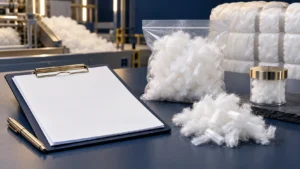
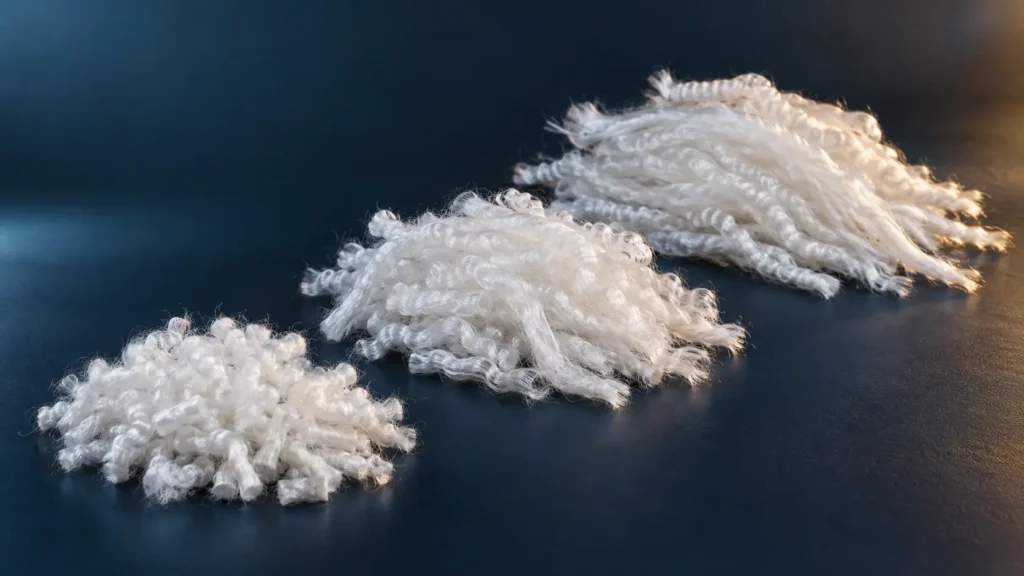
Manufacturers spin continuous polyester filaments, add crimp, and cut the fibers to a defined length. We call this measurement cut length.
Cut length differs from denier. Denier shows the thickness of each fiber strand. Cut length shows the length of that strand. Two fibers can have the same denier and behave differently on a production line because they have different cut lengths.
How Cut Length Affects Opening, Carding, and Uniformity
A production line first opens compressed fiber bales. Carding equipment then separates, aligns, and forms the fibers into a uniform web. Cut length affects both steps.
If the fiber length does not match the line settings, fibers can move unevenly through the process. Very short fibers may give the equipment less control. Very long fibers may collect in some parts of the machine or reduce smooth fiber movement.
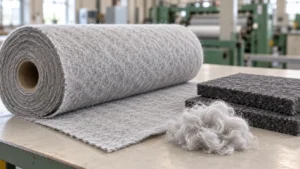
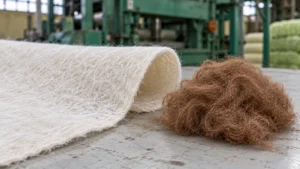
During carding, the machine needs to separate and align the fibers. A suitable cut length helps the line produce a more uniform web. This point matters in industrial felt, nonwoven products, insulation, and mattress layers.
Cut length does not explain every production issue. Crimp, finish, bale density, humidity, and machine settings also affect the result. However, cut length should be one of the first specifications your team checks.
Matching Cut Length to Your Equipment
No single cut length suits every production line. Spinning, carding, needle punch, nonwoven, and insulation lines all work differently. Start with the final product before you select the fiber specification.
Share the final product, the production method, the current fiber specification, and the main production issue before you order. These details help the supplier recommend a more suitable grade.
You can review available options on the polyester fiber products page. If your line uses virgin or recycled fiber, include the raw material type in your request.
How to Choose Denier and Cut Length Together
Denier and cut length need each other. Denier affects fiber fineness, bulk, and part of its mechanical behavior. Cut length affects how the fiber moves through opening, carding, and later production stages.
Fine fiber does not guarantee a good result when the cut length does not suit the line. Thicker fiber can also cause problems when the cut length does not fit the process. Review denier, cut length, crimp, finish, and the final application together.
For a custom recommendation, send your final product, production method, required quantity, and current fiber specification to Alyaf Nemoune, a polyester fiber manufacturer.
Signs of an Unsuitable Cut Length
Uneven web formation, unstable carding behavior, more waste, or difficulty in keeping production consistent can point to a cut length mismatch. These signs can also come from other parts of the process.
The best method compares the current grade with a proposed sample under normal production conditions. Your team should record fiber opening, carding behavior, web uniformity, and final product quality. This test gives you a decision based on actual production results.
Check the Right Cut Length for Your Line
Your product and production conditions matter more than a fixed number. Send your line details, required denier, final application, and current production issue for an initial review.
Visit the Alyaf Nemoune Contact Us page to request support or a sample. You can also read more technical guides in the Alyaf Nemoune blog.
Frequently Asked Questions
What is the difference between polyester fiber cut length and denier?
Denier shows fiber thickness. Cut length shows fiber length after cutting. You should review both specifications together.
Can I choose cut length without checking my production line?
No. Your equipment, production method, and final product should guide the selection.
What details should I send for a cut length recommendation?
Send the final product, production method, current denier, current fiber specification, production issue, and required quantity.
Can I request a sample before a large order?
Yes. Visit the Contact Us page and send your request. The sales team can review sample options with you.